In short: Natural material coverings interact with water; slope, ventilation and detailing shape the outcome. This post is general information, not a waterproofing promise.
Natural material and water
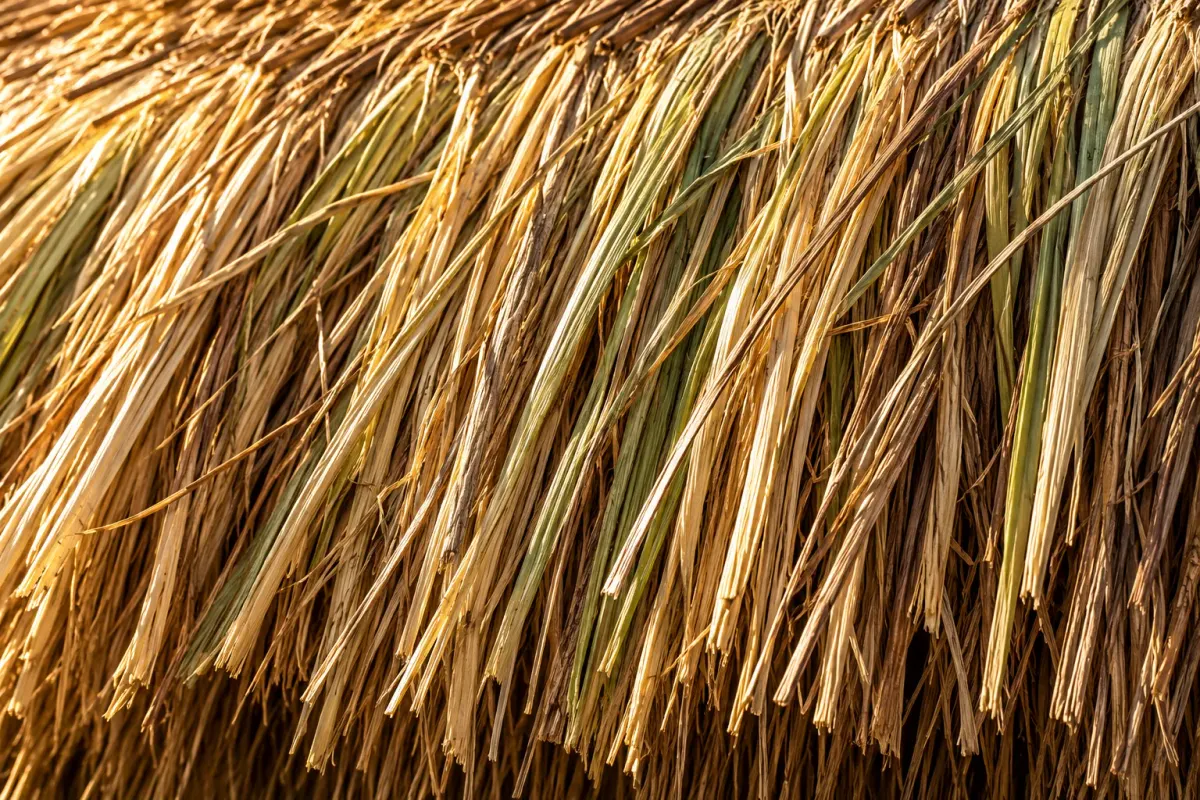
Reed, woven mat and bamboo are made of plant fibres. When rain and moisture meet these fibres, the material carries some water away and may absorb some. What matters is that water can leave the surface instead of staying on it, and that the material can dry afterwards.
This post is general information. We want to state from the start that a decorative covering alone is not treated as a waterproofing solution; if protection from rain is expected, it needs to be discussed separately.
What shapes water behaviour
Slope
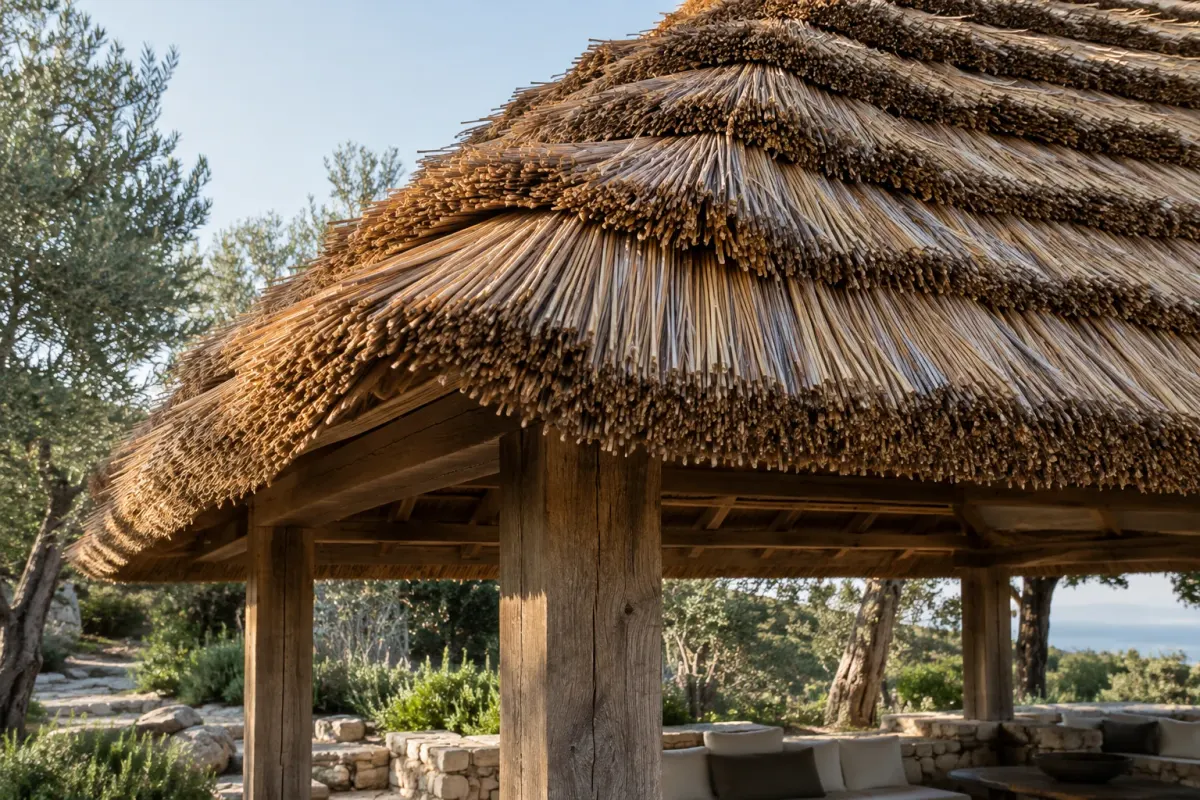
The slope of the roof or covering affects how quickly water runs off. Water may leave low-slope surfaces with more difficulty, so slope is always discussed at design stage.
Ventilation
When both faces of the material can breathe, drying after wetting is helped. Areas that stay damp and cannot ventilate may change faster over time.
Details
- Solutions at joints and edges where water will not collect
- Contact points between supporting timber or bamboo and the ground
- Planning of gutters and runoff routes
A look by space and product type
Layered coverings, woven panels and steeply pitched structures relate to water in different ways. For example, a hedgehog roof and a reed roof are assessed separately in terms of surface and slope. Woven mat and bamboo surfaces used indoors meet moisture and steam more than rain.
The rainfall pattern and wind direction of the space matter too; see our post on season, wind and sun.
Practical suggestions
Leaves and soil collecting on the surface can block the flow of water, so regular cleaning matters. A visual check after rainy periods is useful. If you see a problem, you can ask about the maintenance service or write to us via the contact page. How each project relates to water is assessed project by project.
A checklist after rainfall
After a rainy period, a short visual check of the space is the easiest way to notice potential problems early. No technical knowledge is needed; looking carefully is enough.
- Water pooling on the surface or areas that stay wet
- Points darkening or staining at edges and joints
- Moisture marks on parts of the supporting timber or bamboo near the ground
- Build-up of leaves or soil in gutters and runoff paths
If you notice anything, take a photo and make a note. You can find out whether anything needs quick action by talking to an expert. Because the relationship of natural materials with water depends on the conditions of the space, what is described here is general information and not a prediction of any outcome.
In summary
The relationship of natural materials with water depends on slope, ventilation, detail solutions and care. The basic aim is for water to run off without collecting on the surface and for the material to dry afterwards. This post contains general information and is not a waterproofing promise. If protection from rain is a priority for you, saying so at the start allows the space to be assessed correctly.
Frequently asked questions
Is a reed roof rainproof?
We make no general promise on this. Water behaviour varies with slope, installation and space; if you have an expectation, it is discussed separately during the visit.
Does wet material get damaged?
Natural materials can get wet and dry. The problem is water collecting for a long time or a lack of ventilation, which is why detailing and care matter.
Do I need extra measures to be protected from rain?
If protection from rain is expected, you need to say so at the start. A decorative covering alone is not counted as a waterproofing solution.