Two names, two different jobs
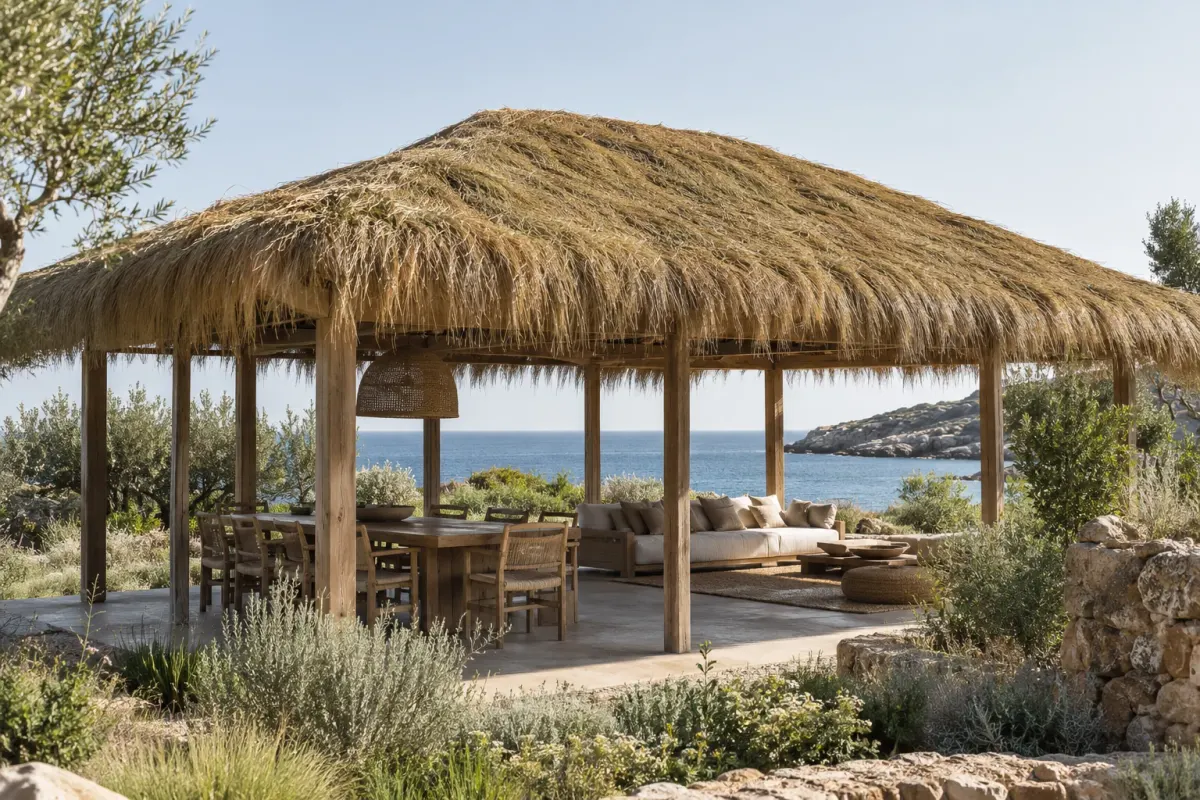
Hanging grass cladding and hanging fringe are often confused. One is a covering that forms the roof surface; the other is a finishing detail that ends in a hanging form along the roof edge. Both can also be used together on the same roof.
This distinction matters when describing a project. Assuming that someone describing the cladding and someone describing the fringe mean the same thing can lead to mismatched expectations later. The hanging grass cladding and hanging fringe pages describe the two jobs separately.
Hanging grass cladding: the character of the surface
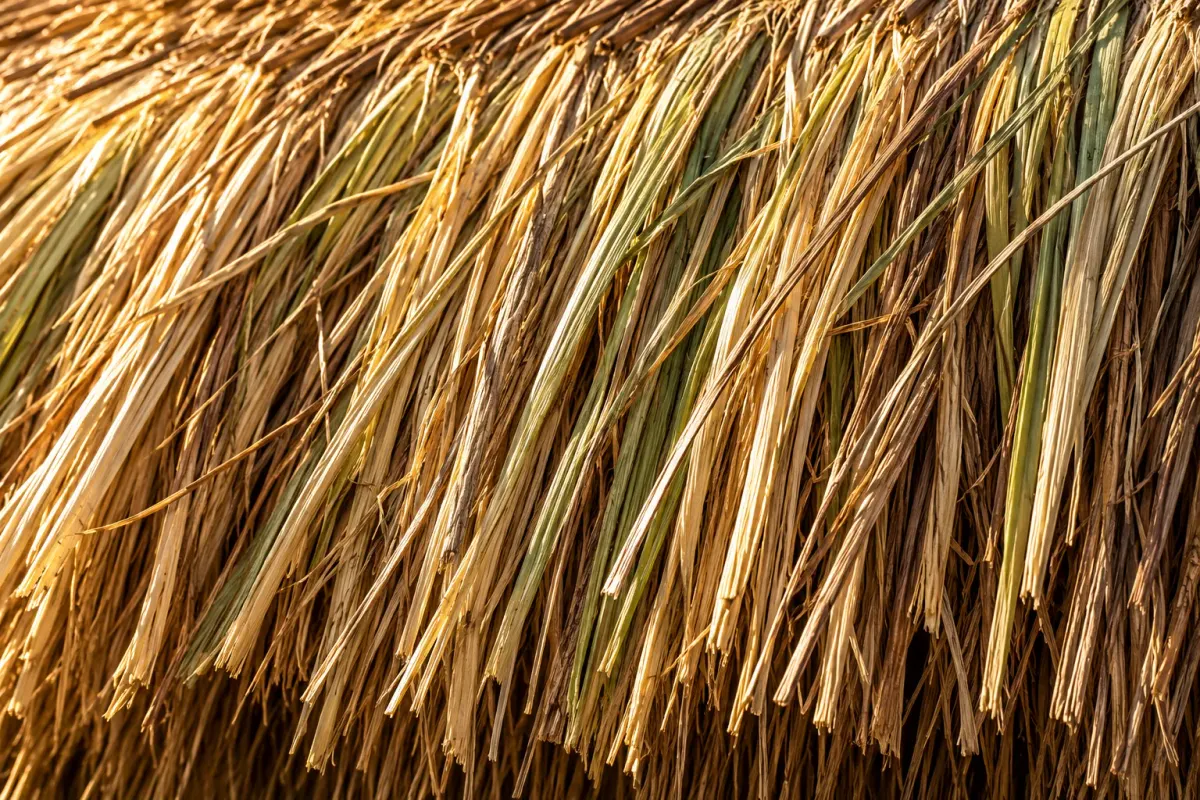
Used as cladding, fiber direction and density determine how the roof form reads. A denser arrangement darkens the shade and weighs down the silhouette; a more open arrangement lightens the surface.
Applying the cladding over the whole roof surface also raises the question of whether the structure and slope are suitable. That is why the cladding decision is made together with the surface size and the structure.
Hanging fringe: the character of the edge
A fringe does not cover a whole roof; it gives the edge of an existing surface a free-ended finish. The fixing line, the free length of the fringe and the transition height are the basic dimensions of this application.
Free ends can move in the wind. This movement adds life to the look, but it is taken into account when length and fixing are chosen.
Using them together, and proportion
When hanging grass cladding and hanging fringe are used together on the same roof, proportion matters. If the surface cladding is heavy and dense, a short fringe may be enough; if the surface is plain, a long, free fringe can give the roof character. Making both full at once can make the roof look heavier than needed.
This balance should be seen on a drawing or model. How the roof looks in profile, where the fringe sits relative to eye level and how the edge line reads from below are the three most useful viewpoints for the decision. They can be assessed together in the survey conversation.
Adding a short description next to the names used when explaining the project prevents misunderstandings. For example, whether only a free-ended finish at the edge is wanted or a dense surface over the whole roof settles the scope of work from the start. This clarity saves effort on both the design and the installation side.
A practical order for choosing
First the need of the space is set: is the entire surface to be renewed, or only the edge to be completed? Then fiber, density and free length are compared on a sample. It is worth remembering that tone differences are normal in a natural material.
To share a photo and the dimensions of the existing roof, the quote form can be used; details are settled during the survey.
It should also be known from the start that natural material can change tone over time and that fringe ends may take a slightly different shape with wind and use. This is part of the nature of the material, and the right expectation raises satisfaction with the application.
Frequently asked questions
Are hanging grass and hanging fringe the same product?
No. Hanging grass is an application that covers the roof surface, while hanging fringe is a finishing detail that ends in a hanging form along the edge. They can be used together on one roof.
Can only a fringe be added to an existing roof?
That depends on the structure and the edge detail of the existing roof. Whether the fixing line and transition height are suitable is checked during the survey.
How does hanging fringe behave in the wind?
Free ends can move with the wind. Fringe length and fixing points are planned with this effect in mind; the exact approach is determined by the conditions of the site.